Our Journey & Mission
and Christian–Muslim relations.
The Story Behind the Mission
Who Is Mark Harlan?
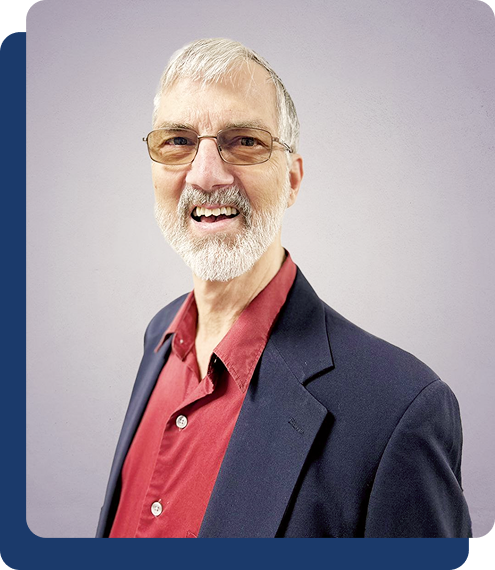
Drawn to the Arab world, Mark moved to Egypt to study Arabic. Through the Center for Arabic Studies Abroad at the American University of Cairo, he studied Islam under scholars from Al-Azhar University, Dar al-ʿUlum, and the Dominican Institute for Oriental Studies. Later, he served as Associate Professor and Academic Dean at Jordan Evangelical Theological Seminary in Amman, Jordan, teaching entirely in Arabic for nearly a decade. Mark has since taught at numerous institutions across the globe — from Dallas International University, where he served as a professor and program director of Abrahamic Studies for over a decade, to seminaries and training centers in Russia, Armenia, the Philippines, Nigeria, South Africa, Sudan, and beyond. He has engaged in public dialogues with Muslims, taught the Bible to Muslims, and the Qur’an to Christians.
Mark has published in journals such as the Journal of Ecumenical Studies, the Journal of Language, Culture and Religion, and Christianity Today. His scholarship focuses on developing a biblical theology of Islam, hermeneutics of the Bible and Qur’an, the role of Ishmael in Scripture, contextualization in Muslim-majority contexts, and Christian- Muslim dialogue. Through Bridging Scriptures, Mark brings together decades of fieldwork, scholarship, and cross-cultural ministry in one place — offering resources for anyone seeking to engage with Islam with intellectual honesty, theological depth, and genuine respect.
Values & Vision

Unbiased Perspective
To re-evaluate theological traditions and perspectives through fresh readings of the sacred Scriptures.

Divine Purpose
To understand God’s purposes for humanity and work to fulfill God’s
promise to Abraham to bless all the families and peoples of the world (Genesis 12:3).

Justice and Peace
To foster a just peace for Jews, Christians, and Muslims, especially
in the Holy Land.

Faithful, Respectful Witness
To make known the gospel, the good news of the
kingdom of God that was inaugurated by Jesus the Messiah—a spiritual kingdom which
is not confined to one religious tradition.

Bridges, not Walls
To search for common ground without abolishing distinctives between Christian and Muslim religious traditions. The goal is to build bridges of communication and understanding through relationships grounded in authenticity, respect, trust, tolerance, and compassion.
Have questions about our research or want to start a dialogue? We’d love to hear from you. Feel free to reach out to us Email, and we’ll get back to you as soon as possible.
Contact Us
Have questions about our research or want to start a dialogue? We’d love to hear from you. Feel free to reach out to us via Gmail, and we’ll get back to you as soon as possible.