Bridging The Scriptures

A Welcome to Muslim Visitors 

Scholarship, honesty, and respect at the intersection of the Qur’an and the Bible 

Who This Page Is For

This site is the work of a Christian scholar who has spent decades studying the Qur’an, Arabic, and Islamic thought — not to argue against Islam, but to understand it more deeply, and to build genuine bridges of understanding between Muslims and Christians. You are welcome here. 
Dr. Mark Harlan has lived and taught in the Arab world, studied Arabic in Cairo, and spent years in dialogue with Muslim scholars, students, and neighbors. The resources gathered here grow out of that experience. They are offered in the same spirit: not as a verdict on Islam, but as an honest engagement with it. 
What You Will Find Here

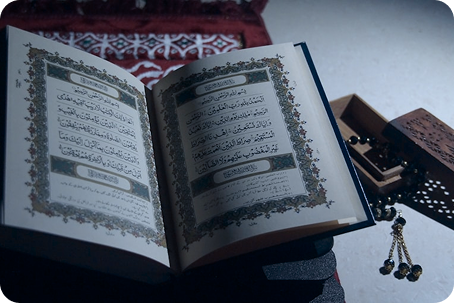
The resources on this site engage the Qur’an as a serious text worthy of careful study. You will find articles — by both Christian and Muslim scholars — that examine what the Qur’an says about the Messiah, about the Bible (Tawrat, Zabur, Anbiya’ and Injil), and about the relationship between the two scriptures. The aim is not to dismiss Islamic interpretation, but to explore it honestly alongside Christian perspectives.

This is a Christian site that reflects Christian convictions. It does not, however, exist to proselytize, that is, to promote conversion to Christianity. It exists because of the site’s conviction that the relationship between the Qur’an and the Bible is meant to be positive and constructive. Therefore, Muslims and Christians need to reconsider many traditional understandings.

A Suggested Starting Point

The resources below have been selected with Muslim visitors especially in mind. Each engages the Qur’an on its own terms — some written by Muslim scholars, others by Christians who have spent careers in serious study of Islam.

Articles worth reading first

Harlan, Mark

“The Qurʼan and the Bible: Competitors or Companions?” A peer-reviewed examination of how the Qur’an and Bible relate to each other — not as rivals but as scriptures in conversation. Published in the Journal of Ecumenical Studies, 2025.

Abu Rabee, Iyad.

“The True Meaning of Al-Injīl in the Qurʼan”
A Muslim scholar’s careful study of what the Qur’an itself means when it refers to the Injīl — the Gospel. Published in the Journal of Language, Culture & Religion.

Saeed, Abdullah.

“The Charge of Distortion of Jewish and Christian Scriptures” 
An honest, academically rigorous examination of the Islamic claim that Jewish and Christian scriptures have been corrupted — by one of the leading Muslim scholars of Qur’anic studies.

Phillips, Gabriela Profeta.

“The Qurʼan and Its Biblical Under-text: New Perspectives on Non-Muslim Readings of the Qurʼan”
An exploration of how the Qur’an’s rich engagement with Biblical material opens new possibilities for interfaith reading.

A book worth knowing about

This is a challenging book — and an important one. Through close analysis of the Qur’anic text, including the key passage in Sūrat al-Nisā’ (4:157–158), the author argues that the Qur’an’s own wording affirms both the death and crucifixion of the Messiah. It will not settle every question, but it is serious Qur’anic scholarship and deserves a serious reading.

Featured

Scholars whose work bridges both traditions 

Joseph A. Islam — Qur’an’s Message

His studies of the Qur’an prioritize the Qur’an itself over later Islamic secondary sources — an approach that will resonate with readers who want to return to the text.
https://www.quransmessage.com/

Abdulla Galadari — Qur’anic Hermeneutics

A scholar of the Qur’an in relation to Biblical and Rabbinic literature. His work takes Islamic and Jewish-Christian sources with equal seriousness. Forty-five of his writings are freely available online.
https://khalifa.academia.edu/

AbdullaGaladari

Fred Donner — Early Islamic History

A University of Chicago historian whose research suggests that early Islam began as a broadly monotheist movement that included Jews and Christians. His work opens important historical questions about the origins of the two communities.
https://chicago.academia.edu/

FredDonner/Papers

“The Qur’an and the Bible are much more aligned with each other than most people — Christian or Muslim — have thought. This site is an invitation to discover how and why.” — Mark Harlan

Explore Further

Explore curated resources, and insightful articles to deepen your understanding and continue your learning journey.